When you're driving, it's easy to focus on other cars - but pedestrians are everywhere, too. You'll encounter people walking, running, biking, crossing streets, getting off buses, or moving through parking lots and neighborhoods. At some point, everyone is a pedestrian. When you're behind the wheel, it's your responsibility to watch for people walking and be prepared to stop.
In 2024, 7,080 pedestrians were killed in traffic crashes in the United States, and more than 71,000 were injured.1 NHTSA reports that a pedestrian was killed in a traffic crash about every 74 minutes.1
The Takeaway: Slow down, stay alert, and expect pedestrians - even when you don't think you'll see one.
Don't only look for pedestrians at crosswalks.
People walking can be anywhere, including:

Speed matters when you're sharing the road with pedestrians and vulnerable road users. The faster you're traveling, the less time you have to recognize a pedestrian and react. Getting somewhere a few seconds faster isn't worth putting someone at risk.

Pedestrian crashes can happen in many different ways. Knowing some of the most common situations can help you recognize a potential problem before it happens!1
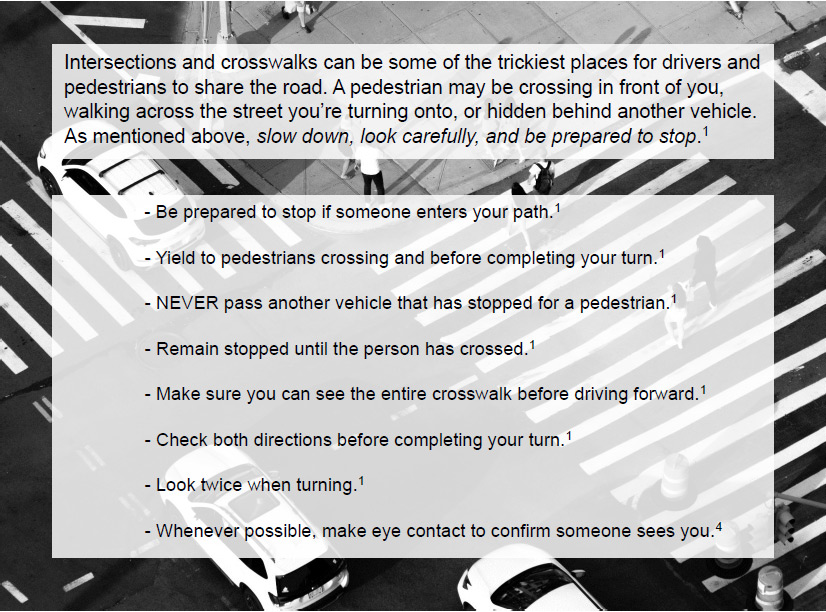
During your teen years, you are likely to be walking independently and exposed to traffic. Walking around traffic requires the same critical thinking skills as riding your bike and driving a car. As a pre-driver or new driver, you have an opportunity to learn by watching traffic and how each road user (cars, bicycles, and pedestrians) relates to one another. Here are some tips on staying safe as a pedestrian:

 Wear bright clothing or reflective gear
 Use lights at night or when visibility is poor
 Plan your safest route with less traffic, slower speeds, lighting, and sidewalks
 Follow the rules of the road
 Look left-right-left and behind for traffic before crossing a driveway or road
 Cross in marked crosswalks at corners or intersections and obey pedestrian crossing signals
New Hampshire law gives pedestrians certain rights and responsibilities - but being a driver means you also have a responsibility to watch for and protect vulnerable road users.

What this means for you as a driver
Even when a pedestrian is not following the rules, you still have a legal responsibility to exercise due care to avoid hitting them. New Hampshire Law specifically requires drivers to take proper precautions when they see a child or someone who is obviously confused, incapacitated, or intoxicated. NH RSA 265:37
Knowing the law is important - but safe driving means more than simply knowing who has the right-of-way. Your goal isn't to prove who had the right-of-way. Your goal is to get everyone home safely.

Bicyclists and electric-bicycle riders are also vulnerable road users. New Hampshire law requires drivers approaching a bicyclist to exercise due care and leave a reasonable and prudent distance between the vehicle and bicycle.6


Watch for Bicycles at Night New Hampshire law requires bicyclists to wear at least one item of reflective outerwear from 30 minutes after sunset until 30 min before sunrise.7 Don't rely on a bicyclist to be highly visible.
You won't always be behind the wheel. Sometimes you'll be the person walking across the street. As a driver, remember that pedestrians are sharing the road with you.
Slow down.
Pay attention.
Yield when you're supposed to.
Give people the time and space they need to get where they're going safely.
You can't control what everyone else does - but you can control how you drive.